Spotted Tilapia
Pelmatolapia mariae
Spotted Tilapia (Pelmatolapia mariae) is a hardy African cichlid widely introduced outside its native range and often established in warm freshwater canals, ponds, and slow rivers. It is a nest-building omnivore that can be caught on small natural baits and light tackle where populations are legal to target.
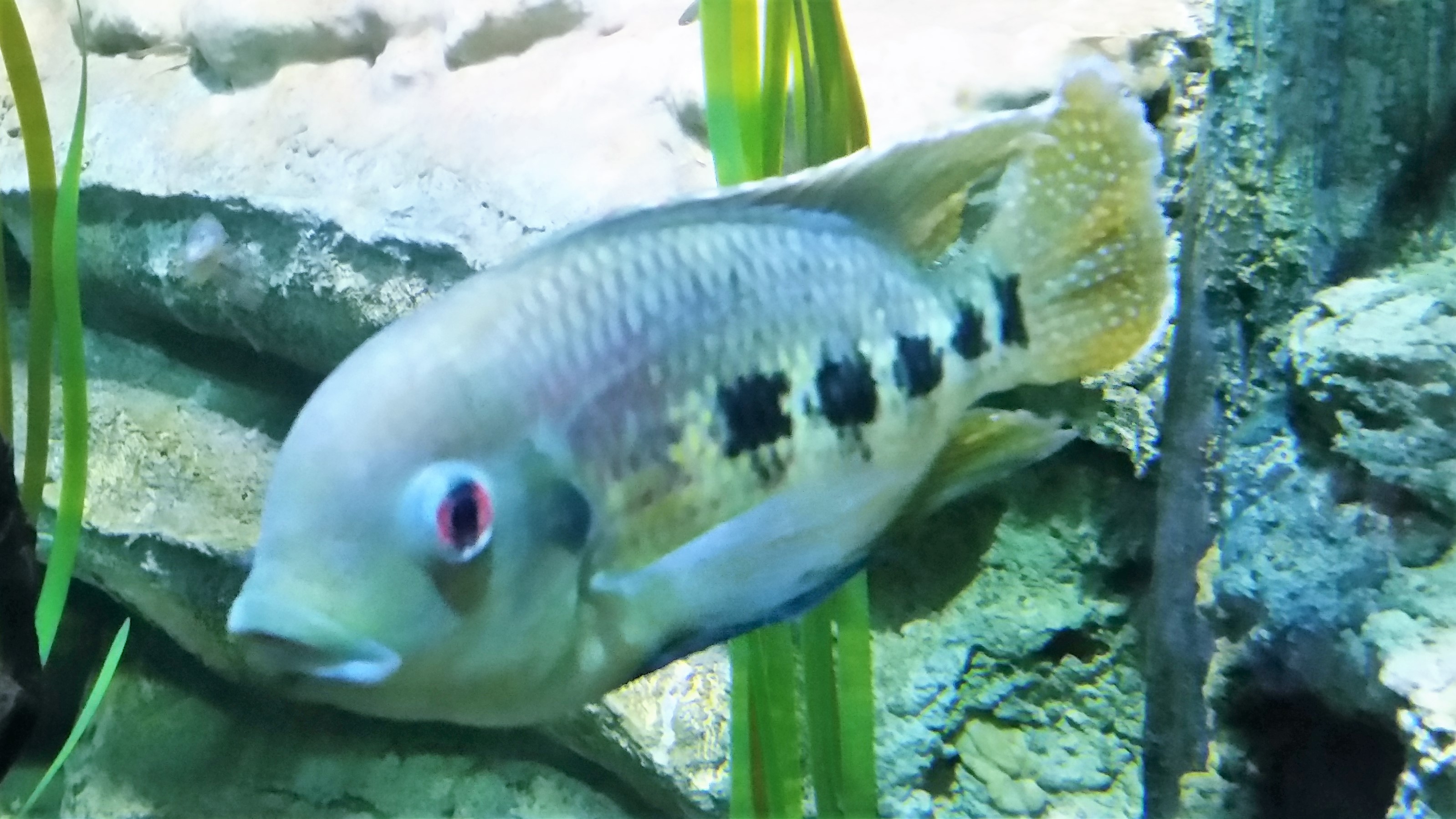

Identifikationspunkte
- Deep, laterally compressed cichlid body with a long continuous dorsal fin
- Distinct dark spots on the sides and sometimes on the fins
- Usually gray-brown to olive with a more rounded tail fin and small mouth
Lebensraum
Warm, slow-moving freshwater and still waters with vegetation, submerged structure, mud or sand bottoms, canals, ponds, reservoirs, and sluggish river margins; often near cover in shallow to mid-depth water.
Ködernotizen
Small worms, crickets, bread, corn, dough balls, shrimp pieces, and tiny jigs or soft plastics can all work. In clear water, small live or fresh baits usually outfish larger offerings.
Verhalten
An opportunistic omnivore that grazes algae, detritus, aquatic plants, and small invertebrates. It is territorial when breeding, with males defending nests in shallow margins, and it often feeds confidently around cover and edges.
Vorsicht
Often invasive outside its native African range; check local rules because possession or transport may be restricted. Not known for major toxin concerns, but do not eat fish from contaminated urban waters.
Angelnotizen
Fish light line and small hooks under floats or free-lined along weed edges, docks, and canal banks. Present baits close to cover and keep retrieves slow for small lures; spawning fish may strike aggressively near nests.