Atlantic Mackerel
Scomber scombrus
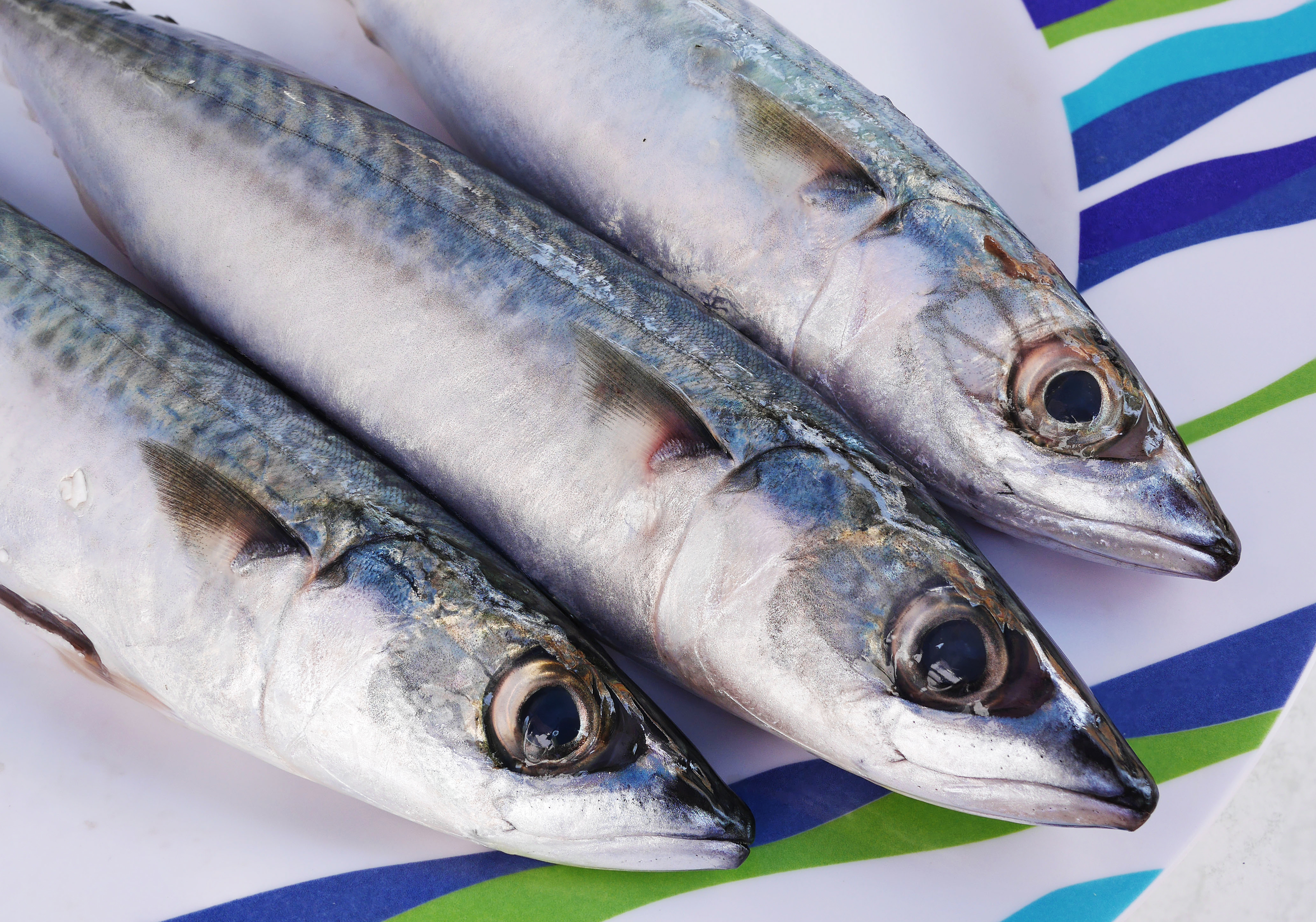
Atlantic mackerel (Scomber scombrus) is a fast, schooling pelagic fish of the North Atlantic, known for its blue-green back, wavy bars, and oily flesh. It feeds heavily on zooplankton, small crustaceans, and small baitfish, and forms dense feeding schools near the surface and midwater.
.jpg)
Identifikationspunkte
- Irregular dark wavy bars on the upper back with no swim bladder spots pattern
- Deep, streamlined torpedo-shaped body with a narrow caudal peduncle and deeply forked tail
- Finlets behind the dorsal and anal fins, typical of scombrids
Lebensraum
Cold to temperate North Atlantic shelf waters, offshore and inshore during seasonal migrations; commonly over open water, along drop-offs, current edges, and around bait concentrations from the surface to midwater.
Ködernotizen
Small shiny lures, feather rigs, Sabiki-style rigs, metal jigs, and small spoons are effective. Natural baits such as strips of herring, mackerel, or sand eel can work well when fish are keyed on baitfish.
Verhalten
Highly migratory and strongly schooling. Feeds by sight and on dense plankton or small fish schools, often creating surface disturbance when chasing prey. Usually most active in cool water and around tidal flow.
Vorsicht
Handle carefully because the first dorsal fin and gill covers can be sharp. Atlantic mackerel is an oily fish that spoils quickly if not iced promptly after capture.
Angelnotizen
Troll small spoons or feathers, cast into busting schools, or drift and jig near bait concentrations. Match lure size to the small forage they are feeding on; light tackle and fast retrieves are commonly productive.