Fischführer hat Priorität für Naher Osten.
Durchsuchen Sie veröffentlichte Fische mit echten Bildern, Identifikationspunkten, Wassertyp und vorsichtigem lokalen Kontext. Die Region ändert die Reihenfolge, nicht den Suchbereich.
Ausgewählte Region
Zuerst erscheinen warme Küstenarten, befischte Süßwasserziele, Tilapia, Karpfen und regionale Meeresfische.
Nach Regionsfilter festlegen
Zeigt 12 von 1047 veröffentlichten Fisch
Seite 35 von 88

Great Blue-spotted Mudskipper
Boleophthalmus pectinirostris
Great Blue-spotted Mudskipper (Boleophthalmus pectinirostris) is a mudskipper of tropical Indo-West Pacific tidal flats and mangrove edges. It spends much of its time out of water on exposed mud, where it feeds and defends burrows. Angling value is limited and it is not a common target species.
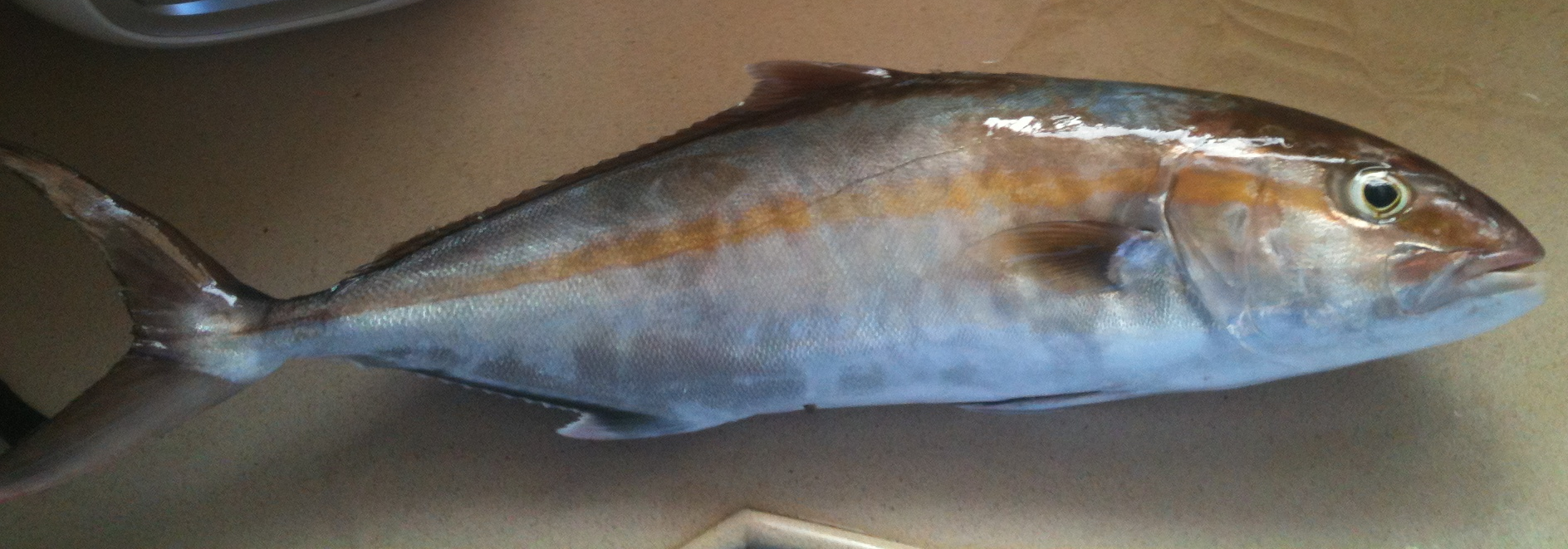
Greater Amberjack
Seriola dumerili
Greater Amberjack ist eine häufige Fischart und kommt typischerweise in geeignete Gewässer und strukturreiche Bereiche dieser Art vor. Dieser Eintrag fasst Erkennung, Lebensraum und Angelhinweise zusammen.
Greater Amberjack
Seriola dumerili
Greater amberjack (Seriola dumerili) is a fast, powerful pelagic jack found around reefs, wrecks, and offshore structure in warm and temperate seas. It feeds aggressively on fish and squid, and is prized by anglers for hard, sustained runs.

Greater Weever
Trachinus draco
The greater weever is a venomous coastal fish of the eastern Atlantic and Mediterranean, often buried in sand with only eyes and dorsal spines exposed. It is not a major angling target, but can be caught accidentally by shore anglers and is best handled with extreme care.

Green Damselfish
Amblyglyphidodon indicus
Green Damselfish (Amblyglyphidodon indicus) is a small Indo-Pacific reef fish that lives in dense coral growth and is usually seen in loose groups. It is not a major angling target; most encounters are by snorkelers or divers rather than rod-and-reel anglers.

Green Moray
Gymnothorax funebris
Green Moray (`Gymnothorax funebris`) is a large Atlantic moray eel found on reefs and rocky bottoms. Despite its name it is usually dark olive-brown to greenish and spends much of the day tucked in crevices, hunting at night.

Green Sunfish
Lepomis cyanellus
Green Sunfish are hardy, aggressive sunfish native to much of eastern and central North America and widely introduced elsewhere. They favor warm, quiet water and readily take small prey and many baits, often around cover in ponds, creeks, and backwaters.

Green Swordtail
Xiphophorus hellerii
Green swordtail is a livebearing poeciliid native to streams and rivers of Mexico and Central America, now widely introduced in warm waters worldwide. Males are famous for the elongated lower tail-fin ray (“sword”); females are larger and lack the sword.

Greenside Darter
Etheostoma blennioides
Greenside Darter is a small North American freshwater perchlet that lives on clean, cool streams with moderate current and rocky bottoms. It forages along the streambed for aquatic insect larvae and other tiny invertebrates.
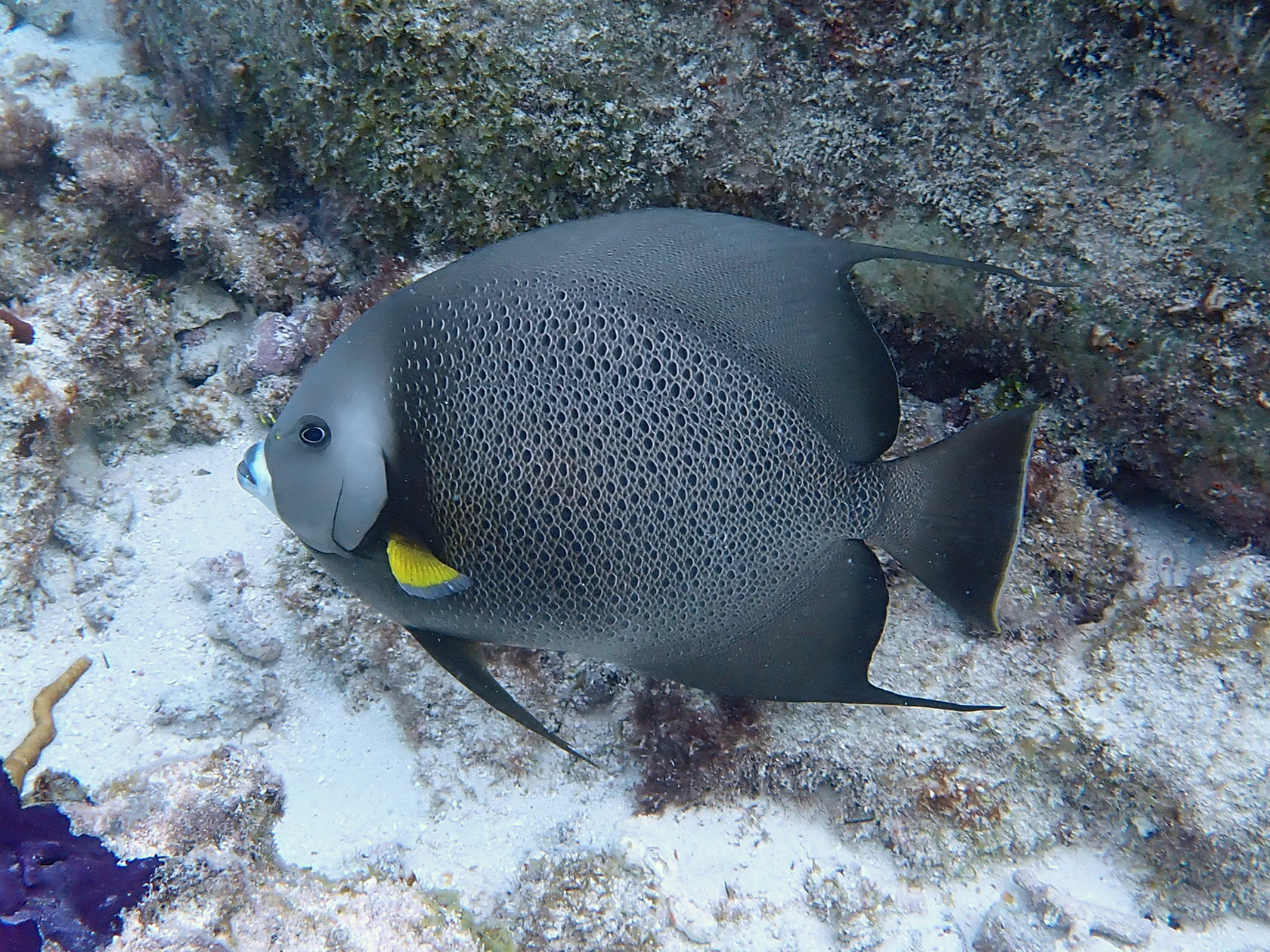
Grey Angelfish
Pomacanthus arcuatus
Grey Angelfish (Pomacanthus arcuatus) is a large reef angelfish of the tropical western Atlantic and Caribbean. Juveniles live among reefs and mangroves; adults patrol deep reef slopes and drop-offs, grazing sponges and tunicates.

Grey Triggerfish
Balistes capriscus
Grey Triggerfish (Balistes capriscus) is a robust reef-associated marine fish found on rocky bottoms, reefs, and wrecks across warm temperate and tropical waters. It feeds on hard-shelled invertebrates and small benthic prey, using strong jaws and teeth to crush shellfish.

Grey Wrasse
Symphodus cinereus
Grey Wrasse (Symphodus cinereus) is a small European wrasse of shallow coastal waters, especially seagrass beds, rocky reefs, and sheltered bays. Males can become more colorful in breeding season, but the species is usually drab grey-brown and is often overlooked by anglers.