Central Stoneroller
Campostoma anomalum
The Central Stoneroller is a small North American cyprinid that grazes on periphyton and algae in clear to moderately flowing streams. It is common in riffles and runs with gravel or cobble, where it uses a scraping mouth to feed on rock surfaces.
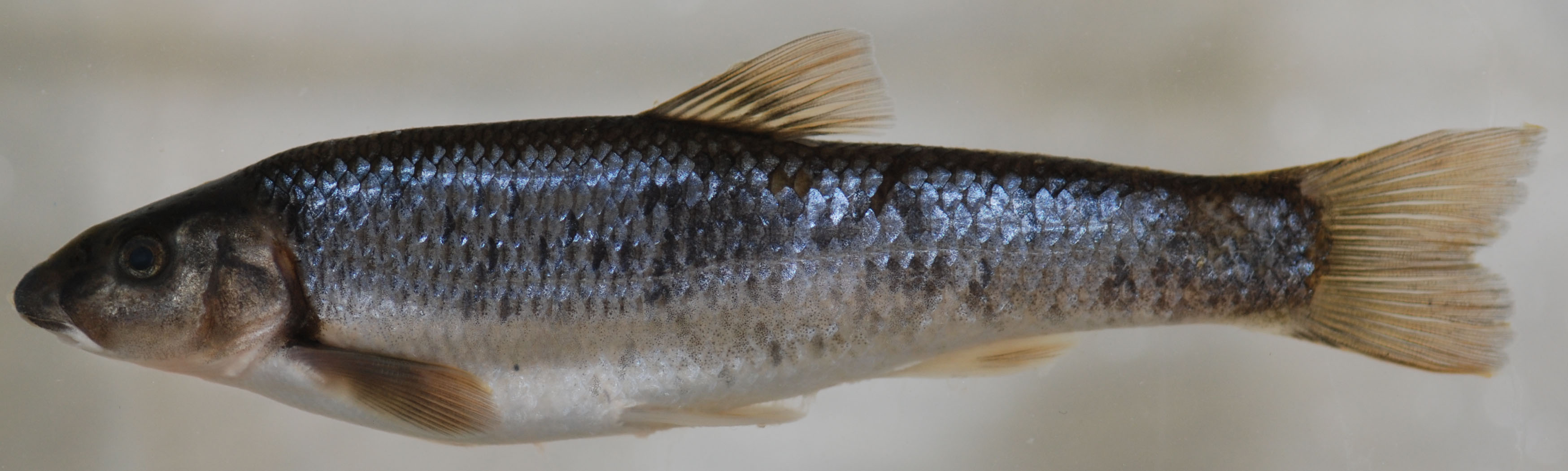
_(14990370433).jpg)
Identification points
- Short, blunt head with a downturned, scraping mouth adapted for grazing
- Dusky lateral stripe on a slender olive-brown body, often with a pale belly
- Males in breeding condition can show reddish-orange coloration on fins and body
Habitat
Shallow streams and small rivers with moderate current, especially riffles, runs, and gravel-cobble bottoms with attached algae and aquatic plants. Often associated with clear water and well-oxygenated habitats; juveniles may use quieter margins.
Bait notes
Not a targeted game fish in most areas. Tiny pieces of worm, dough bait, bread, or small bits of soft natural bait may take it incidentally; small nymphs and micro-jigs are more relevant if intentionally sampling small stream fish.
Behavior
Primarily an herbivore/detritivore that scrapes algae, diatoms, and fine organic matter from stones and submerged surfaces. It is usually in loose schools and is most active in daytime in flowing water.
Caution
No notable human consumption hazard is commonly cited, but it is a small nongame fish and may be subject to local collection or bait regulations; check state rules before retaining or using it as bait.
Fishing notes
Use light tackle in shallow riffles and run edges, with small hooks and minimal weight. Present baits near the bottom or drift tiny flies/nymphs naturally; it is more often caught by accident than pursued as a sport species.