King Mackerel
Scomberomorus cavalla
King mackerel is a fast-moving coastal pelagic predator of the western Atlantic and Gulf of Mexico. It hunts baitfish in schools and is a popular sportfish, but large fish can carry high mercury and ciguatera risk in some areas.
.jpg)
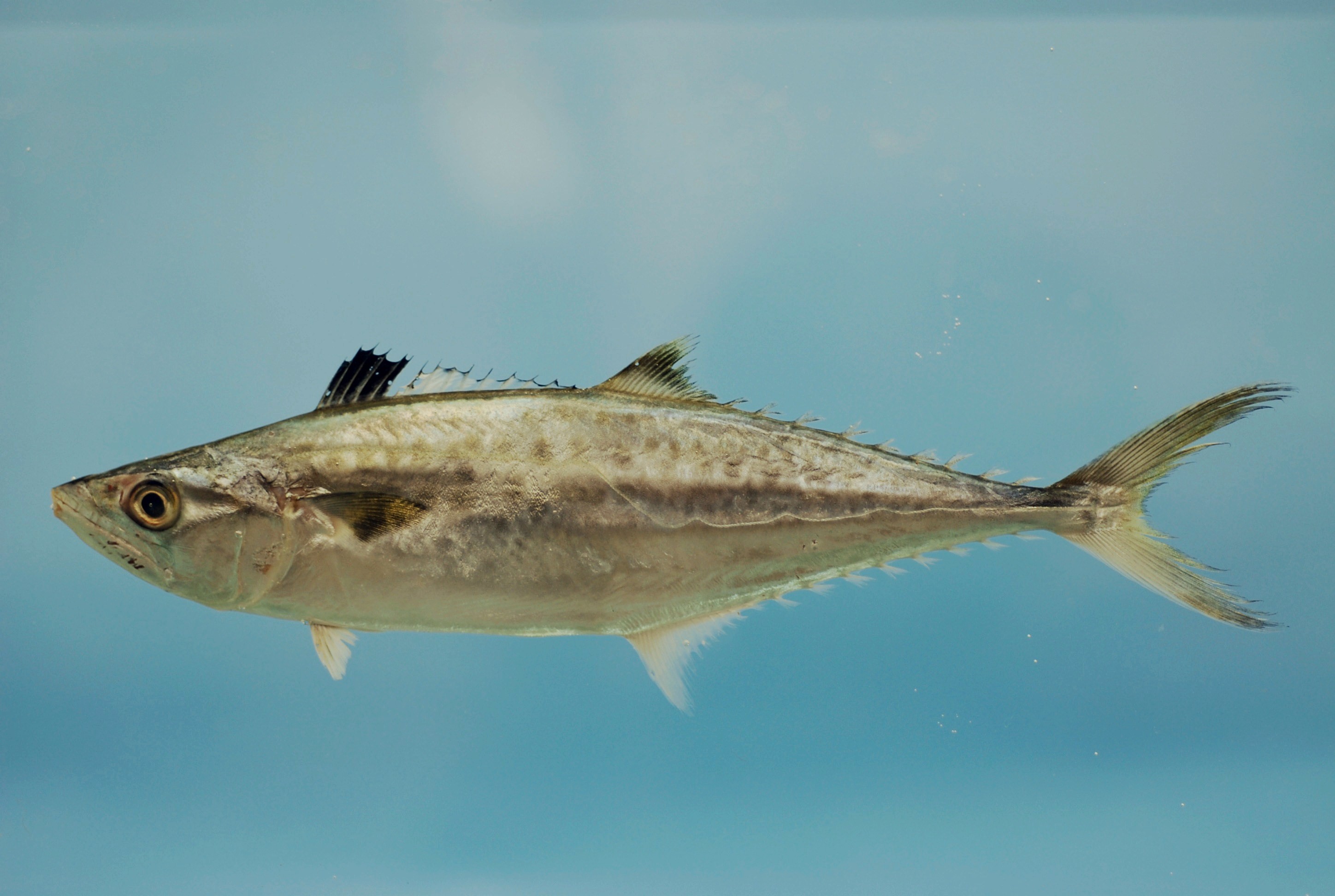
Identification points
- Slender, torpedo-shaped body with a deeply forked tail
- Very small, nearly invisible lateral line on the sides of the body
- Dark green-blue back with silvery sides and no large spots on the body
Habitat
Nearshore and offshore saltwater over continental shelf edges, reefs, wrecks, bait schools, and coastal drop-offs; often moves inshore along beaches, piers, and passes when menhaden, sardines, or mullet are present.
Bait notes
Live blue runners, mullet, menhaden, pilchards, and cigar minnows are top baits; dead ribbonfish and bonito strips also work. For artificials, use flashy spoons, deep-diving plugs, and trolling lures rigged with wire leader.
Behavior
A schooling ambush predator that feeds on menhaden, sardines, anchovies, herring, mullet, and small squid. It often strikes fast-moving prey near the surface or midwater and is most active around current breaks, rips, and bait concentrations.
Caution
Large king mackerel commonly have high mercury; follow local consumption advisories and avoid frequent meals, especially for children and pregnant people. Ciguatera is possible in some tropical/subtropical waters. Sharp teeth can cut leaders and fingers.
Fishing notes
Troll at 4–8 knots along color changes, bait schools, rips, and ledges; keep lures or baits well back to avoid spooking fish. When live-baiting, use wire or heavy fluorocarbon leader and a slow to moderate retrieve; use a release method if you want to avoid gut-hooking.