Lake Trout
Salvelinus namaycush
Lake trout are a deep-water char native to cold northern lakes across North America. They spend much of the year offshore or in the deepest basins, feeding on ciscoes, smelt, whitefish, and other fish.
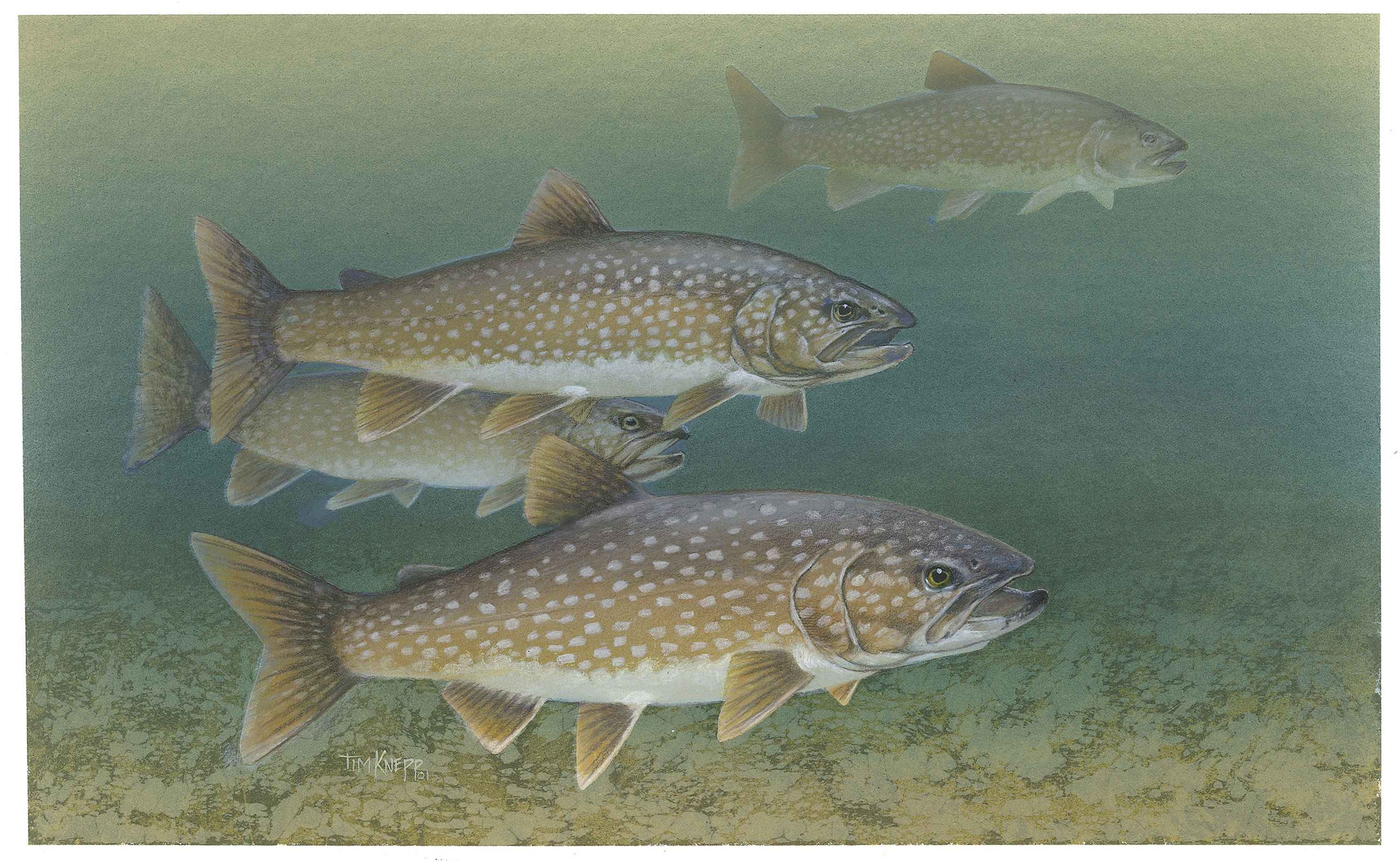

Identification points
- Dark olive to gray back with lighter sides covered in pale, irregular spots; no red/orange spotting like brook trout.
- Deeply forked tail and elongated body with a large mouth extending back toward the eye.
- White leading edges on the lower fins; tail, dorsal, and anal fins often have light mottling or pale margins.
Habitat
Cold, oxygen-rich deep lakes; summer and winter often hold on offshore humps, drop-offs, basin edges, and submerged rock reefs. They also use shallower structure in spring and fall when water temperatures are cooler.
Bait notes
Dead cisco, smelt, or sucker strips work very well where legal; large spoons, swim baits, minnow-style plugs, and tube jigs also take fish. Match local forage size and use large, natural colors in clear water.
Behavior
Primarily piscivorous as adults, with younger fish taking insects and zooplankton. They cruise slowly and often suspend over deep water, then move shallower to feed during low light, on windblown structure, or when prey schools concentrate.
Caution
Lake trout can accumulate mercury and other contaminants in some waters, so check local consumption advisories. Respect local slot limits and seasonal closures, which are common for this species in managed lakes.
Fishing notes
Troll deep with leadcore, downriggers, or weighted line to reach basin fish, or jig vertically over humps and breaklines. Fish early, late, and during cold fronts; slow presentations usually outperform fast retrieves.