Wide-eyed Flounder
Bothus podas
The wide-eyed flounder (Bothus podas) is a right-eye flounder found over sandy and muddy bottoms in shallow coastal waters. It buries itself in substrate and ambushes small fish and crustaceans; records are mainly from the eastern Atlantic and Mediterranean, with some range uncertainty in database indexes.
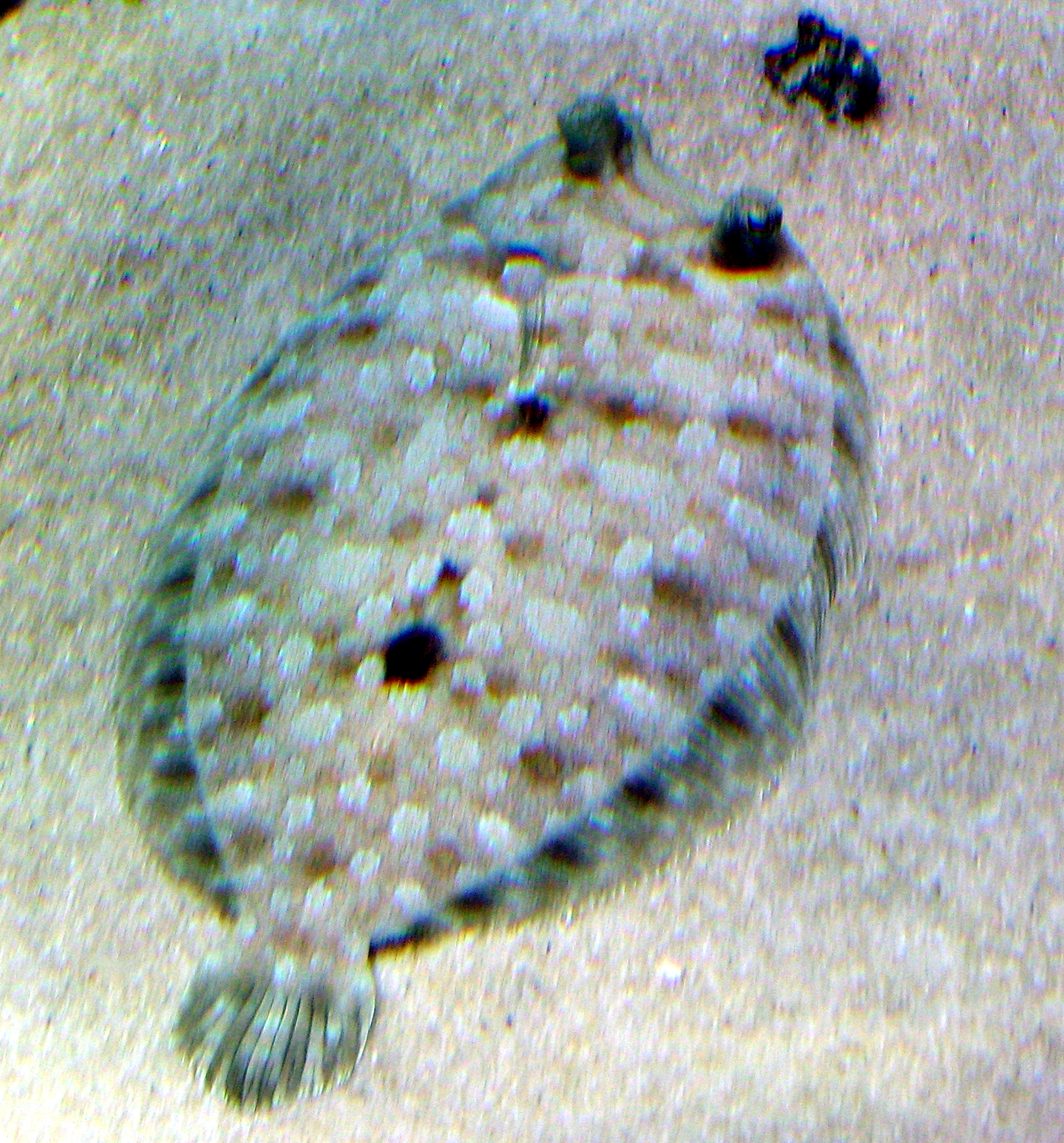

Puntos de identificación
- Both eyes are on the left side of the body, giving it a strongly asymmetrical flatfish profile.
- Upper-side body usually shows scattered dark blotches and mottling that blend with sand.
- Tail fin is relatively rounded and the fish has a deep, oval flounder shape with a small mouth.
Hábitat
Shallow coastal sand and mud bottoms, especially bays, estuaries, seagrass edges, and nearshore shelf areas; it lies partially buried on the seafloor.
notas de cebo
Small strips of fish, shrimp, squid, and tiny live baits can take it when targeting flatfish on sand flats. Small soft plastics or bucktail jigs worked low and slow near bottom also fit its feeding style.
Comportamiento
A bottom-dwelling ambush predator that rests buried with both eyes on the upper side, then strikes small fishes and benthic crustaceans as they pass. Often relies on camouflage and short bursts rather than long chases.
Precaución
No notable species-specific hazards; check local regulations because flatfish identification and minimum sizes can be area-specific.
notas de pesca
Fish light tackle close to bottom with slow drifts, gentle bottom-bouncing rigs, or small baited hooks on sandy flats and channels. Look for subtle bottom texture changes; this is usually a bycatch species rather than a primary gamefish.