Great Barracuda
Sphyraena barracuda
Great barracuda is a large, fast coastal predator found in tropical and subtropical seas worldwide. It patrols reefs, drop-offs, channels, and mangrove edges, ambushing fish with explosive strikes.
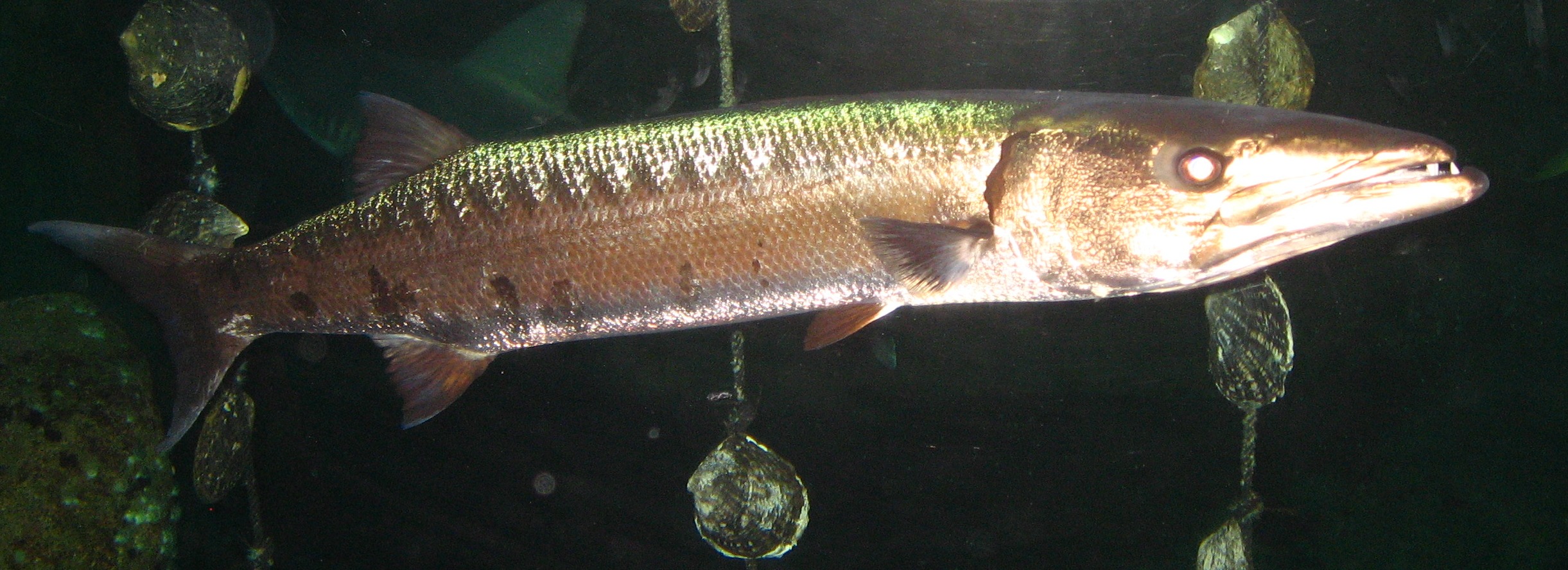

Tunnistuspisteet
- Long, torpedo-shaped silver body with a dark lateral stripe or blotches in younger fish
- Very large head with a pointed snout and a protruding lower jaw
- Two widely separated dorsal fins, with the first fin spiny and the second soft-rayed
Habitat
Tropical and subtropical saltwater: coral reefs, outer reef slopes, channels, lagoons, jetties, mangrove fringes, and clear coastal flats, often near current breaks and bait schools.
Syötti muistiinpanoja
Best on live mullet, pilchards/sardines, pinfish, ballyhoo, or small jacks; also takes fast-moving spoons, stickbaits, and jerkbaits. Use wire or heavy fluorocarbon to reduce bite-offs.
Käyttäytyminen
A solitary ambush predator that hunts by sight, often holding motionless before short bursts at prey. It feeds mostly on fish and will shadow schools, especially at dawn, dusk, and around moving tide.
Varoitus
Handle carefully: barracuda have sharp teeth and can inflict serious bites. Large individuals can carry ciguatera in some tropical waters; avoid eating big fish from reef areas where advisories exist.
Kalastus muistiinpanoja
Cast near reef edges, passes, and bait activity, then retrieve erratically with pauses. For live bait, fish it unweighted or lightly weighted and keep it moving; expect hard strikes close to structure.