Giant Trevally
Caranx ignobilis
Giant Trevally is a powerful coastal jack that grows very large and hunts aggressively around reefs, drop-offs, and surf zones. It is a prized sport fish, but larger individuals can carry ciguatera risk in tropical areas.
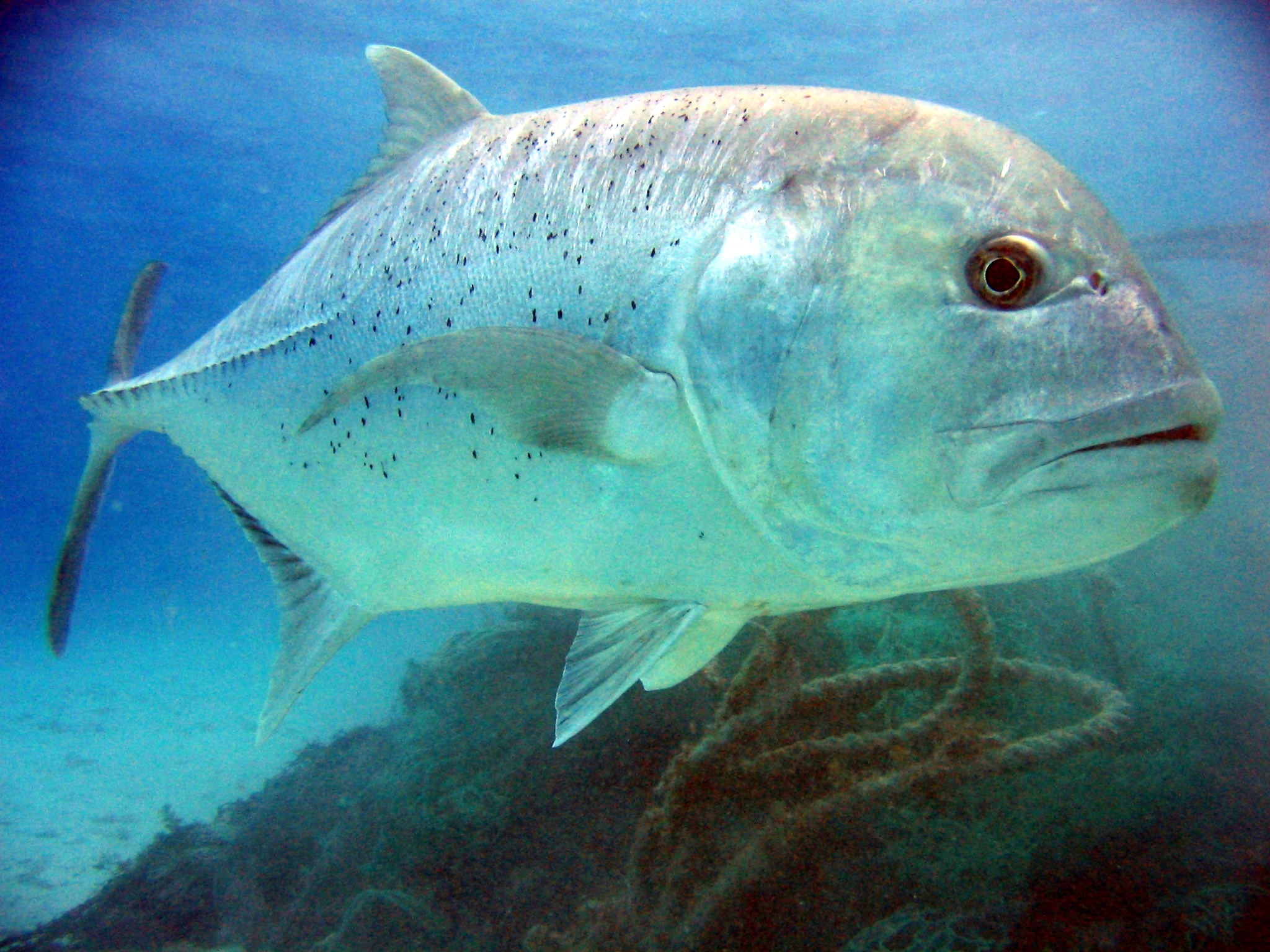

Points d'identification
- Deep-bodied trevally with a steep, sloping forehead and robust shoulders
- Dark gray to bronze body, often with a darker opercular spot and no vertical bars
- Large mouth with a pronounced lower jaw and a deeply forked tail
Habitat
Marine and occasionally estuarine waters along coral and rocky reefs, lagoon edges, passes, surf zones, seamounts, and harbor structures; juveniles often use shallow bays and mangrove-fringed areas.
Notes sur les appâts
Best on live mullet, sardines, herring, fusiliers, small jacks, and squid; also takes big poppers, stickbaits, swimbaits, and metal jigs. Fresh cut bait can work, but active presentations are usually more effective.
Comportement
An apex ambush predator that feeds on baitfish, squid, crabs, and smaller reef fish. Often hunts alone or in small groups, patrolling edges, tide rips, and current lines; very strong, fast, and line-splitting near structure.
Prudence
Large tropical reef fish can carry ciguatera poisoning risk, especially bigger individuals from reef areas; avoid eating large specimens from known ciguatera regions. Extremely powerful fish with sharp gill plates and reef-cut hazard during handling.
Notes de pêche
Target current seams, reef corners, drop-offs, and bait schools at dawn, dusk, and moving tides. Use heavy tackle, strong leaders, and fast hooksets; keep fish clear of coral and be ready for brutal first runs.