Giant Mudskipper
Periophthalmodon schlosseri
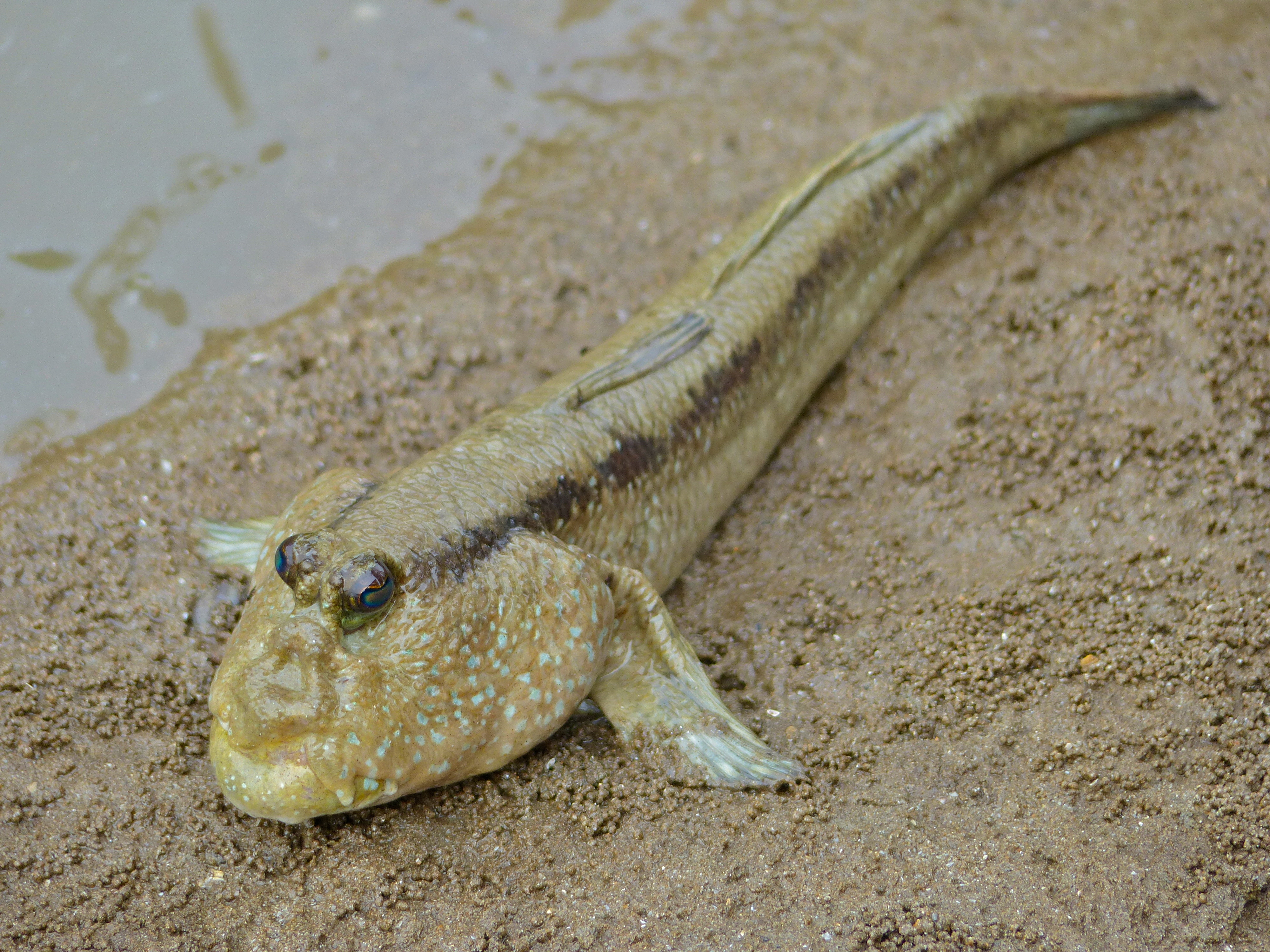
Giant Mudskipper (Periophthalmodon schlosseri) is a large amphibious mudskipper of mangrove mudflats and estuaries in Southeast Asia. It spends much of its time out of water, climbing roots and burrowing in soft mud, and is not a mainstream game fish.
_(15184970133).jpg)
식별 포인트
- Large mudskipper with an elongated body and prominent head
- High-set bulging eyes that protrude above the head
- Grey-brown to olive body with broad pectoral fins used for propping up on mud
서식지
Soft intertidal mudflats, mangrove creeks, estuarine shallows, and brackish tidal marsh edges; lives in self-dug burrows in muddy banks and among mangrove pneumatophores.
미끼 노트
Best taken rarely by anglers using small pieces of shrimp, worm, crab, or fish flesh; tiny soft plastics or insect-imitating lures can draw strikes, but it is mainly an observation species rather than a target.
행동
Air-breathing and highly terrestrial between tides, it forages on small crabs, worms, insects, and other benthic prey. It is territorial, wary, and often feeds at low tide while perched on mud or roots.
주의
Handle carefully; mudskippers can wriggle strongly and may bite. Avoid disturbing mangrove habitat and check local rules, as collection may be restricted in some areas.
낚시 노트
Fish very shallow mudflat edges at low tide, placing bait right beside burrow openings or root tangles. Use light tackle and a stealthy approach; a small hook and minimal weight work best.