White Sea Bream
Diplodus sargus
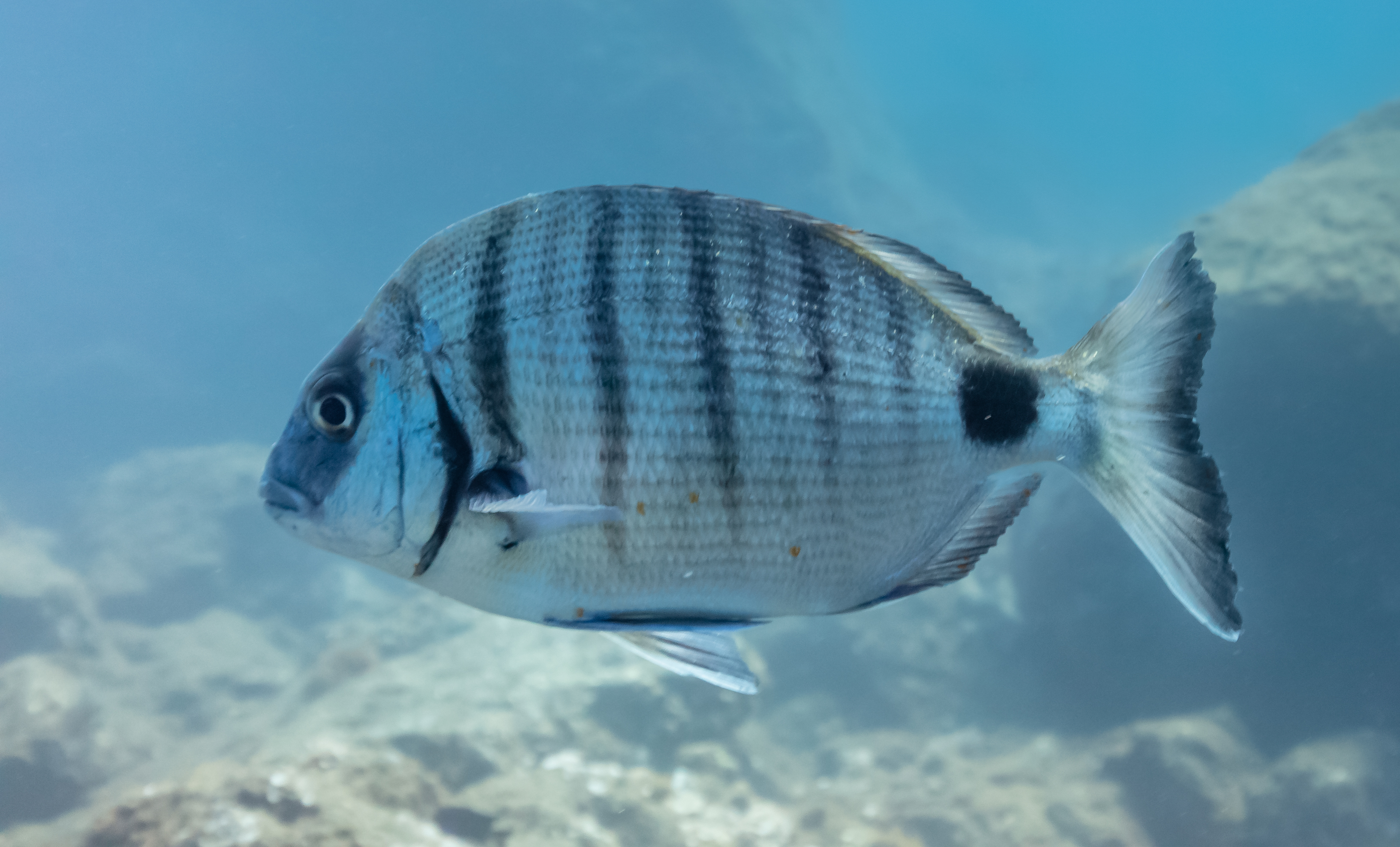
White Sea Bream (Diplodus sargus) is a robust sparid of rocky coasts and reefs, common in the eastern Atlantic and Mediterranean. It feeds on crabs, mollusks, worms, and small fish, and is a popular shore and boat target where legal.
,_Madeira,_Portugal,_2019-05-31,_DD_29.jpg)
Punkty identyfikacyjne
- Silvery to gray body with 5–8 narrow dark vertical bars, often strongest on the sides
- Distinct black band at the base of the tail fin with a darker tail edge
- Deep-bodied sparid profile with a small mouth and prominent incisor-like front teeth
Siedlisko
Shallow rocky shorelines, reefs, boulder fields, harbor walls, seagrass edges, and surf-zone structure; usually near cover and in depths from the intertidal down to roughly 50 m.
Notatki na temat przynęty
Best on mussel, shrimp, crab pieces, clam, squid strips, and small marine worms. Small jigs, baited sabikis, and soft plastics fished near rocks can also work when fish are feeding actively.
Zachowanie
Opportunistic feeder that forages close to bottom, often in small schools when young and more solitary as adults. It crushes hard-shelled prey and will readily pick at baits around structure, especially at dawn, dusk, and in moving water.
Ostrożność
Strong teeth and powerful jaws can crush shellfish; handle carefully. Check local regulations, as bag limits and size limits are common in many areas. Consumption advice is generally routine; no major species-specific toxin issue is widely noted.
Notatki wędkarskie
Fish tight to rocks, breakwalls, and reef edges with light to medium tackle and abrasion-resistant line. Use a small hook and minimal weight; let bait sit near bottom and be ready for quick bites, as fish can be wary in clear water.