Lake Trout
Salvelinus namaycush
Lake trout are a large, cold-water char native to deep northern lakes, where they often suspend offshore or hold near steep drop-offs. They can grow very large and are prized for firm, rich flesh, but many populations are slow-growing and vulnerable to overharvest.
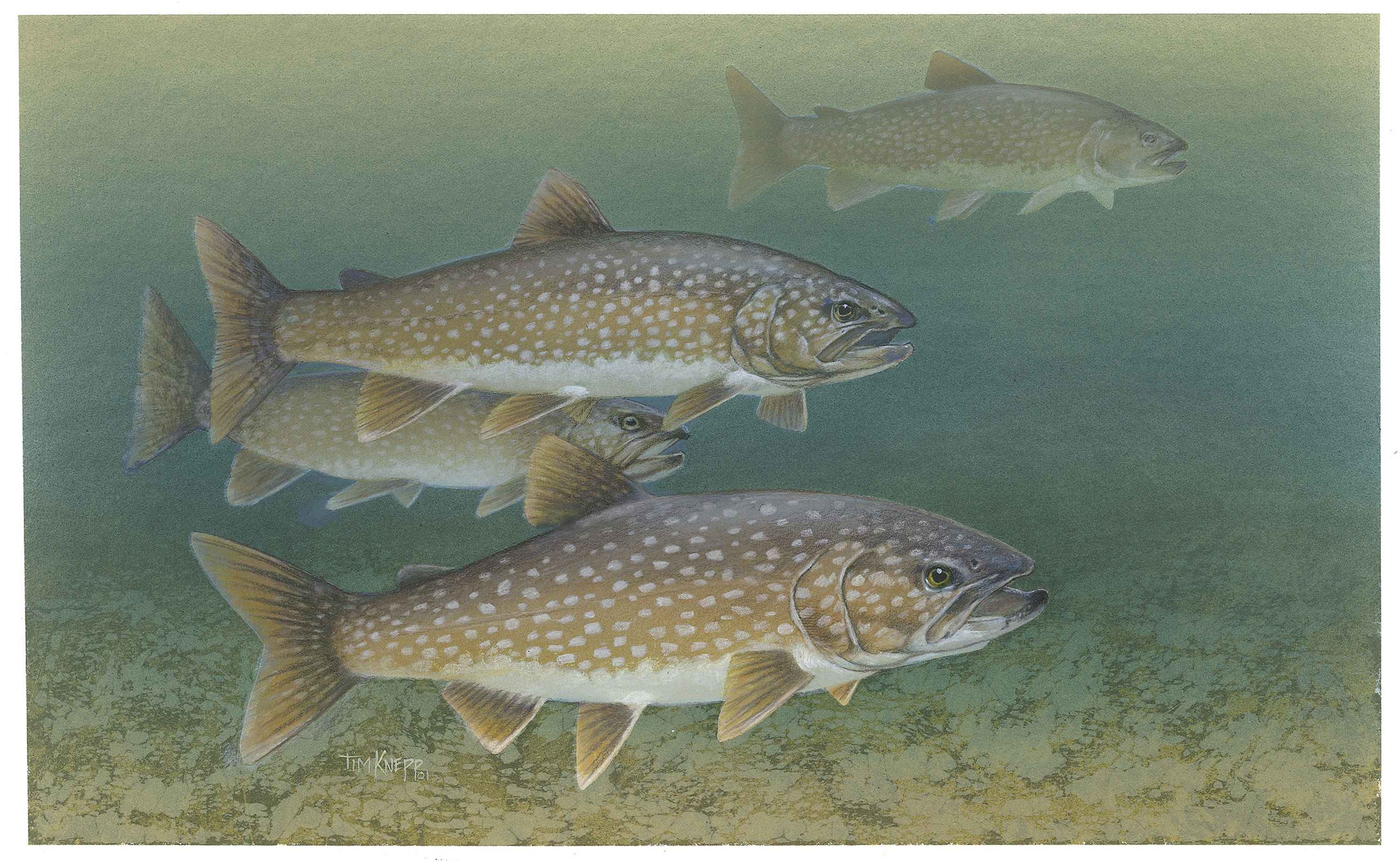

Точки идентификации
- Light spots on a dark gray to olive back, with a pale belly
- Deeply forked tail and small white leading edges on lower fins
- Adipose fin present; body more elongated and less spotted on the head than brook trout
среда обитания
Deep, cold, well-oxygenated lakes; offshore basins, submerged reefs, deep points, trench edges, and steep drop-offs. In summer they often stay in the thermocline; in spring and fall they move shallower to chase baitfish.
Заметки о приманке
Dead or live baitfish, cut cisco/smelt, large spoons, minnow plugs, flutter spoons, and swim baits all produce fish. Match local forage size and color; white, silver, blue, and natural baitfish patterns are strong choices.
Поведение
Primarily piscivorous as adults, feeding on ciscoes, whitefish, smelt, and other forage fish; juveniles take insects and small crustaceans. They are often most active at low light and can roam open water or hold tight to structure.
Осторожность
Many lake trout populations are managed conservatively and may have special size, bag, or seasonal regulations. Large older fish can accumulate contaminants in some waters, so check local consumption advisories.
Рыболовные заметки
Fish deep with sonar, targeting bait clouds, bottom edges, and suspended marks. Troll or jig near the thermocline in summer, and work shallow structure during ice-out and fall turnover; slow presentations usually outfish fast retrieves.