Checkerboard Wrasse
Halichoeres hortulanus
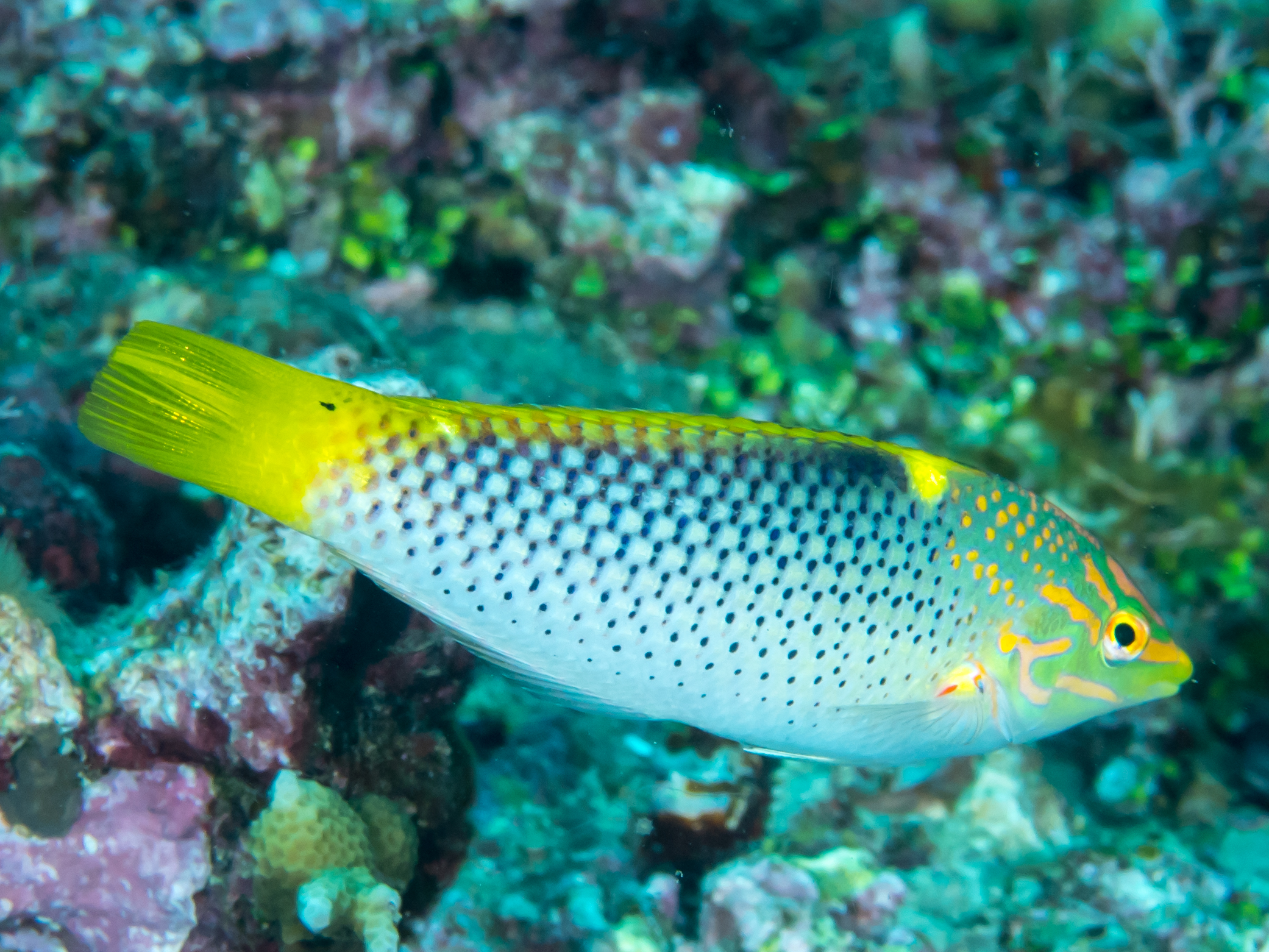
Checkerboard wrasse is a reef-associated marine wrasse found across the Indo-Pacific. It forages in shallow coral and rubble areas, often picking benthic invertebrates from sand, reef flats, and lagoon edges.
_(42786087155).jpg)
Identifieringspunkter
- Distinct checkerboard or mottled pattern of pale and dark square-like markings across the body
- Prominent dark facial markings with a pointed wrasse profile and thick lips
- Elongate wrasse body with a continuous dorsal fin and a rounded tail
Habitat
Coral reefs, reef flats, lagoons, and adjacent sandy or rubble bottoms, usually in shallow tropical marine waters; juveniles often use mixed coral and seagrass margins.
Betesanteckningar
Not a major targeted game fish in most areas. Small shrimp, crab pieces, squid strips, and marine worms can tempt it, as can tiny soft plastics or small jigheads worked near bottom.
Beteende
Diurnal and active, it cruises over reef structure and sand patches picking crabs, shrimp, mollusks, worms, and other small invertebrates; it commonly moves in loose, mobile patterns rather than holding tight to one spot.
Försiktighet
Reef fish from tropical areas can pose ciguatera risk in some locations; local consumption advisories should be checked. The fish has small sharp teeth and spines that can puncture fingers during handling.
Fiske anteckningar
Use light tackle and fish close to reef edges, rubble, or sand channels with a slow bottom presentation. It is more likely to bite opportunistically than on fast retrieves; handle carefully if released.