Ruffe
Gymnocephalus cernua
Ruffe (Gymnocephalus cernua) is a small Eurasian percid that has invasive populations in parts of North America. It’s a bottom-oriented, schooling fish that feeds heavily on benthic invertebrates and is usually caught as an accidental bycatch rather than a prized gamefish.
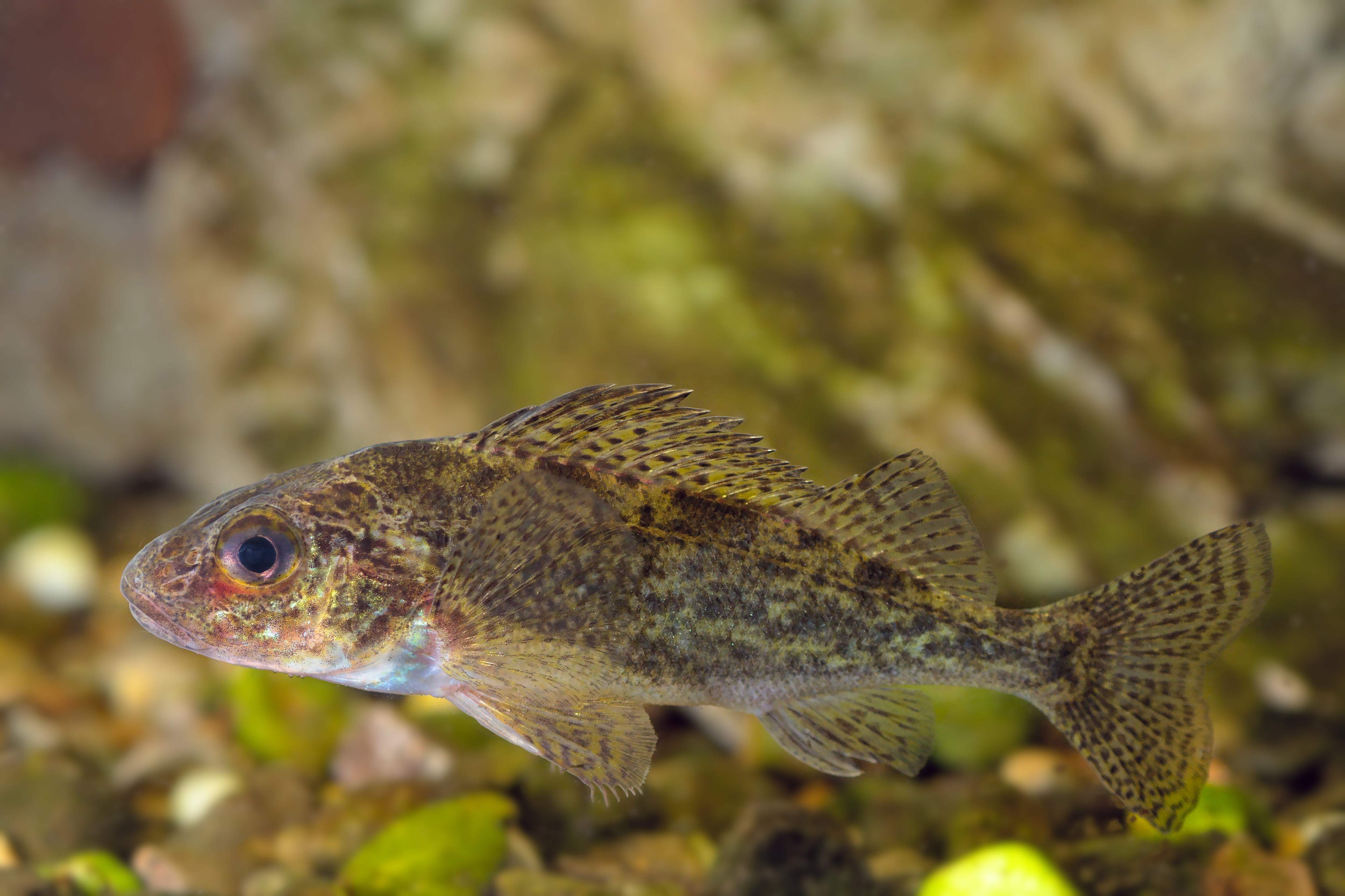

Điểm nhận dạng
- Olive-brown body with many fine dark speckles over the back and sides
- Two connected dorsal fins, with the front dorsal spiny and high
- Large, glossy eyes and a distinctly downturned mouth adapted for bottom feeding
Môi trường sống
Prefers cool to moderately cool freshwater lakes, slow rivers, reservoirs, and sheltered bays with soft mud, sand, or silt bottoms; often holds in deeper water or near structure and can tolerate low oxygen better than many perch-like fish.
Ghi chú mồi
Small pieces of worm, bloodworms, maggots, and tiny jigs tipped with bait are effective. Small soft plastics, microspoons, and bottom fished bits of fish or shrimp can also take them.
Hành vi
Mostly nocturnal and crepuscular, foraging on insect larvae, worms, small crustaceans, and fish eggs along the bottom. It schools tightly, pecks at bait cautiously, and can become very abundant where introduced.
Thận trọng
Sharp preopercular spines can jab handlers, so use care when unhooking. Check local regulations because ruffe are invasive in some waters and may not be legal to transport or release; consumption advisories are usually local-water dependent rather than species-wide.
Ghi chú câu cá
Fish near bottom with light line, small hooks, and minimal weight; use a sensitive rod because bites are subtle. In invaded waters, they often respond to small offerings fished close to the substrate, especially in deeper or low-light periods.