Atlantic Tarpon
Megalops atlanticus
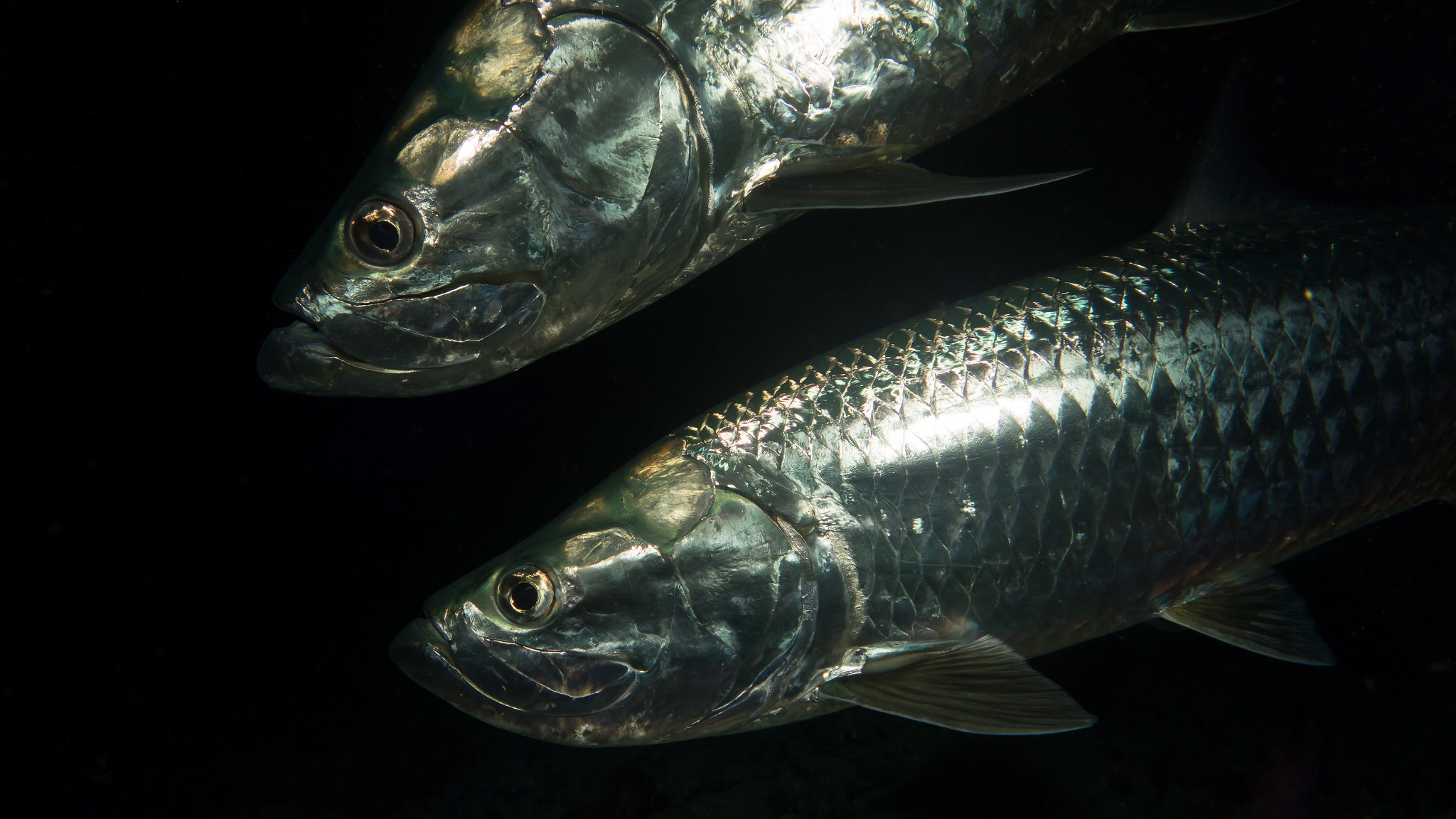
Atlantic tarpon are large, silvery migratory fish known for rolling at the surface and making powerful leaps when hooked. They inhabit warm coastal waters, estuaries, and river mouths, often schooling by size and moving with tides and seasonal temperature changes.
.jpeg)
Identifikationspunkter
- Massive silver body with large, reflective scales
- Deeply forked tail and long trailing last dorsal-fin ray
- Upturned mouth and a prominent bony lower jaw
Habitat
Warm coastal Atlantic waters, Caribbean, Gulf of Mexico, mangrove-lined bays, estuaries, passes, inlets, and lower rivers; juveniles often use low-salinity backwaters and marsh edges.
Agn noter
Live mullet, pilchards, pinfish, shrimp, and crabs are effective; large soft-plastics and swimbaits also draw strikes. In many fisheries, live bait outproduces artificials, but tarpon can be selective and often respond best to natural presentation.
Opførsel
Predatory on fish and crustaceans, tarpon often feed near the surface or in midwater and are famous for gulping air, which helps them survive low-oxygen water. They are highly migratory, tide-oriented, and often roll at dawn, dusk, or on moving tides.
Forsigtighed
Tarpon are a highly prized catch-and-release species in most areas; check local regulations and permit requirements. They are powerful, can injure anglers with violent jumps and thrashing, and large individuals should be handled carefully and kept in the water when possible.
Fiskenoter
Fish around passes, flats, channel edges, bridges, and bait concentrations during moving water. Use stout tackle, long fluorocarbon leaders, and circle hooks for live bait; for artificials, cast ahead of rolling fish and work baits with sharp, erratic action.