Atlantic Salmon
Salmo salar
Atlantic salmon are an anadromous salmonid that hatch in freshwater, migrate to sea to feed and grow, then return to natal rivers to spawn. Wild populations depend on cold, well-oxygenated systems and are sensitive to barriers, warming water, and habitat loss.
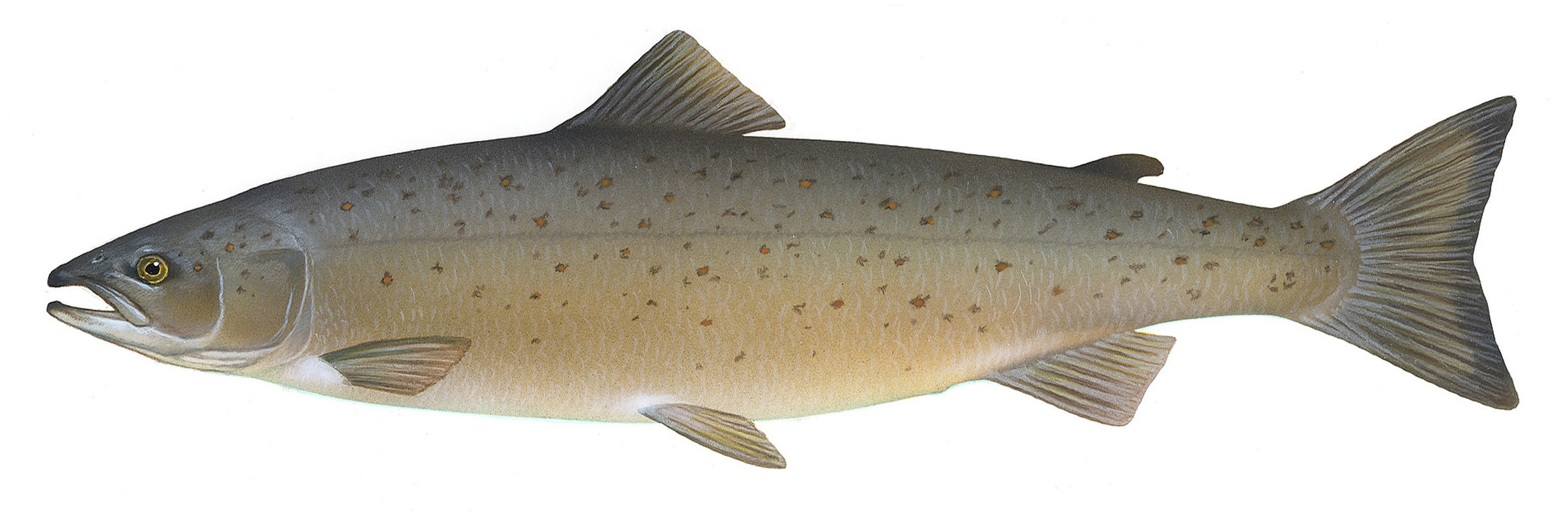

Identifikationspunkter
- Silvery body with black spots concentrated above the lateral line, including the head and gill cover
- Small adipose fin and a slender, streamlined salmonid shape with a slightly forked tail
- Adults often develop a darker back and, in spawning fish, males may show a hooked lower jaw
Habitat
Cold, clean rivers and tributaries for spawning and juvenile rearing, with access to estuaries and the North Atlantic for feeding migrations. Adults stage in deeper pools, runs, and river mouths during runs.
Agn noter
In rivers, effective offerings include roe bags, shrimp/prawn, worms where legal, swung flies, and egg imitations. In saltwater and estuaries, small spoons, spinners, tubes, streamers, and baitfish patterns are used.
Opførsel
Juveniles feed on aquatic insects, drifting invertebrates, and small fish. At sea, they prey on baitfish and crustaceans; returning adults often stop feeding in freshwater and strike out of instinct and territorial response.
Forsigtighed
Many wild Atlantic salmon populations are protected or tightly regulated; check local seasons, gear limits, and catch-and-release rules. Some large, old fish can contain contaminants, and handling should be careful to protect the fish and its slime coat.
Fiskenoter
Target run timing, river mouths, pools below rapids, and current seams. Fish light to medium tackle with dead-drifted presentations, swung flies, or slow retrieves; match local regulations closely because many stocks are strictly managed.